How to Test AI: Real Data, Synthetic Inputs, and Modern Accuracy Loops
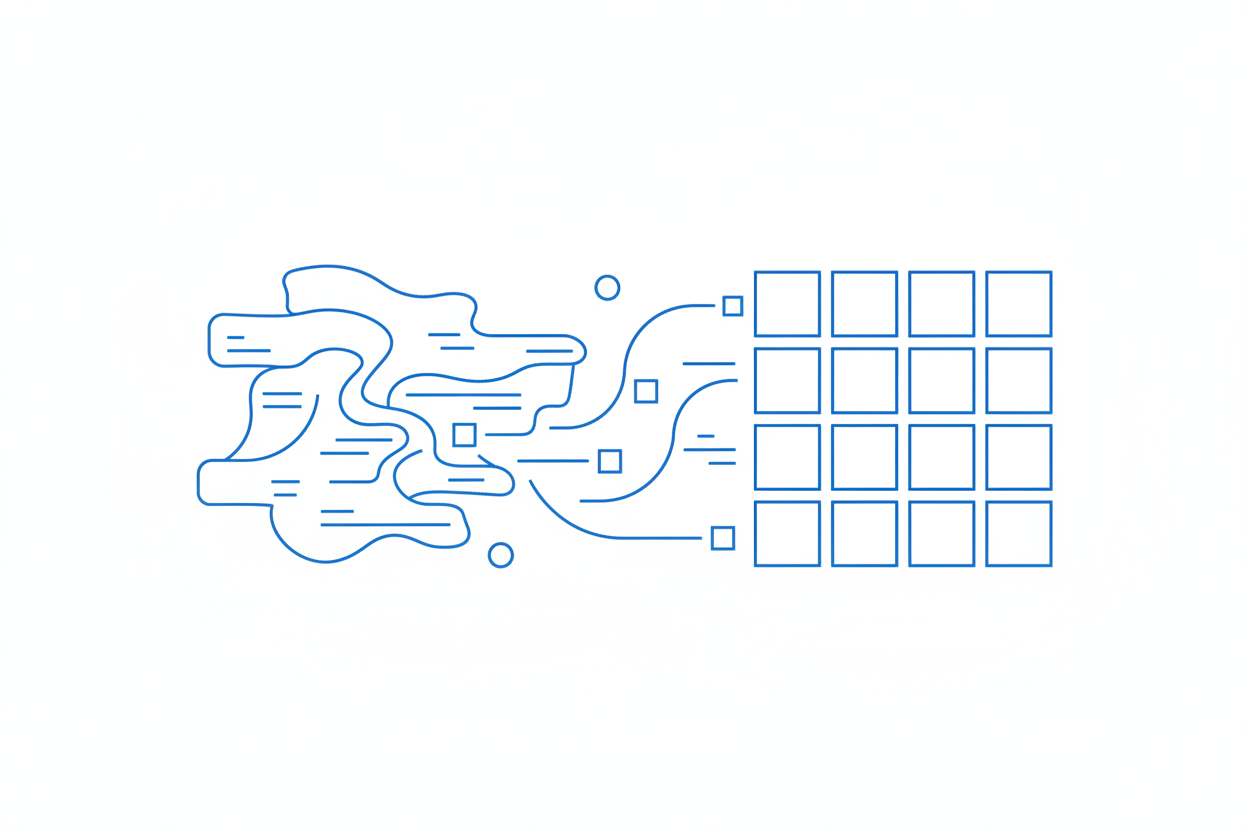
AI is probabilistic, not deterministic — which means testing it requires new methods.
For decades, software behaved in predictable ways. If you gave it the same input, you could trust it to give you the exact same output every time. Testing was straightforward: confirm expected behavior, confirm edge cases, confirm nothing breaks.
AI does not work this way.
Modern AI models are probabilistic systems. They generate outputs based on patterns and likelihoods. They are not guessing — but they are also not following a rigid script. That means testing AI requires an entirely different approach than testing traditional software.
Traditional software is deterministic
In traditional systems:
-
The rules are written by humans
-
The logic is explicit
-
The output is guaranteed if the input is the same
Testing is about verifying logic, not behavior.
If something breaks, the root cause is in the code you wrote.
AI is probabilistic
AI models don’t follow step-by-step instructions. They interpret patterns in data and predict the most likely outcome. This means:
-
Two similar inputs might produce different outputs
-
Context influences output
-
Edge cases may behave unexpectedly
-
Confidence varies depending on the data
AI can be incredibly accurate — but never perfectly predictable.
That’s why testing AI is really testing behavior, not code.
Why AI requires a new testing approach
Because AI behavior varies, you can’t rely on simple “expected output” checks.
Testing becomes about:
-
Evaluating consistency
-
Finding failure patterns
-
Checking boundary cases
-
Measuring accuracy over sets of examples
-
Ensuring the model behaves correctly in a range of situations
You’re not validating whether the software runs; you’re validating how it behaves.
Testing with real data
Real inputs reveal how AI performs under actual business conditions.
Examples:
-
Real customer emails
-
Real PDFs, invoices, or forms
-
Real product descriptions
-
Real support conversations
-
Real operational requests
These tests show you what AI handles well — and where it struggles.
But real data alone isn’t enough, because it rarely includes every scenario you need.
Testing with synthetic data
Synthetic data allows you to intentionally create scenarios the AI must be tested against:
-
Incorrectly formatted inputs
-
Missing or partial information
-
Extreme edge cases
-
Out-of-order details
-
High-ambiguity situations
-
Very long or very short inputs
You generate these examples on purpose to stress-test the model.
Real data tells you what AI does today.
Synthetic data tells you what AI must learn to handle tomorrow.
The new testing loop
Modern AI testing looks like this:
-
Test with real inputs to understand baseline accuracy
-
Create synthetic inputs to expose edge cases
-
Log incorrect outputs or unexpected behaviors
-
Update prompts, improve instructions, or add validation rules
-
Re-test the full dataset
-
Repeat until behavior stabilizes
It’s not “did it work?”
It’s “how often does it work, and under what conditions?”
The goal is not perfection — it’s predictable reliability
AI will never behave like deterministic software.
It will never be 100% consistent.
But with the right testing approach, AI can become:
-
Highly accurate
-
Dependable
-
Consistent under the right conditions
-
Safe to integrate into operations
-
Able to handle real business complexity
Testing transforms AI from a “cool demo” into something your business can trust.
Small businesses benefit the most
AI testing may sound complex, but small businesses actually have an advantage:
-
Fewer workflows
-
Clearer patterns
-
Less internal complexity
-
Faster iteration cycles
This means small teams can reach reliable AI performance much faster than large enterprises — simply by testing with the right inputs.
AI doesn’t just need to work once.
It needs to work consistently.
Testing is how you get there.