Turning Unstructured Data Into Real Workflows with AI + Zapier
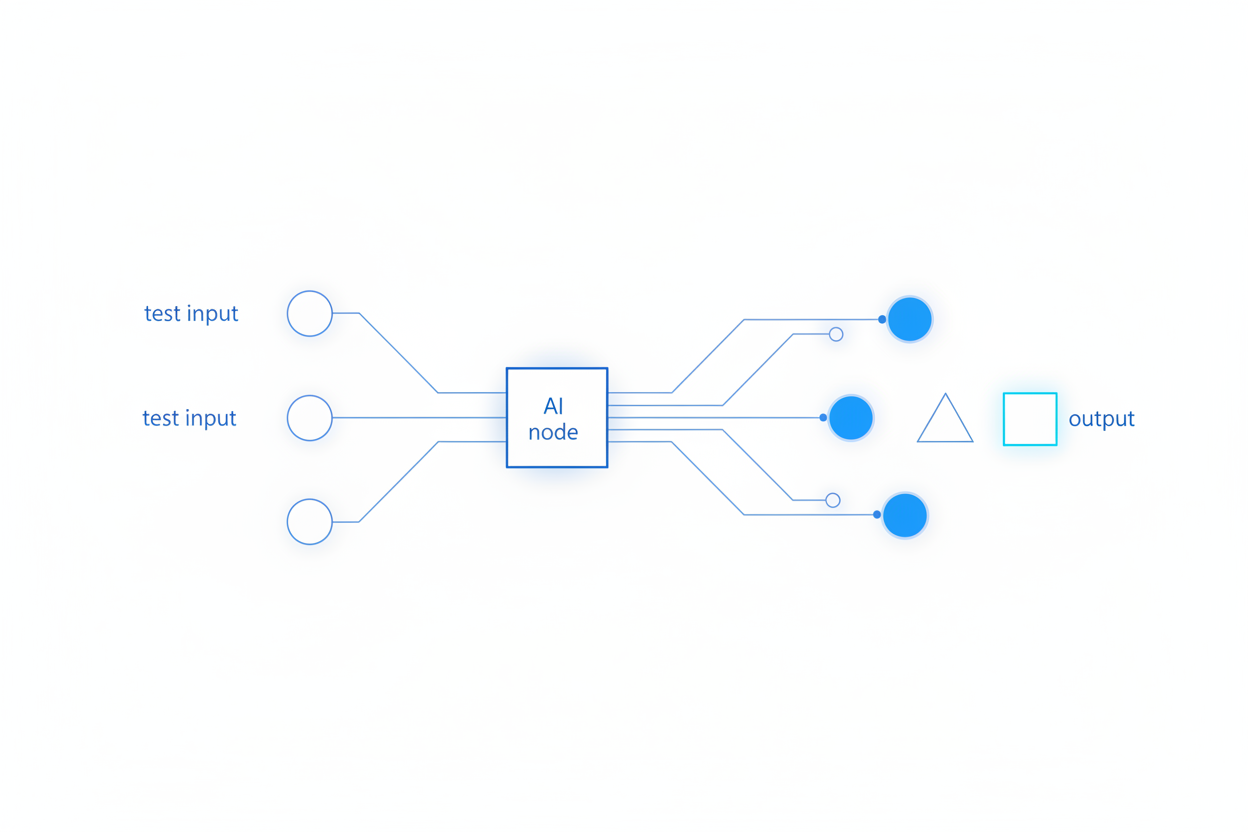
AI turns chaotic inputs into clean, structured data that your systems can actually use.
Every business runs on information, but that information rarely arrives in a clean, structured format. Customers send long emails, PDFs come in dozens of formats, purchase orders vary from vendor to vendor, and internal notes often lack clarity. Traditionally, humans have been the only reliable way to interpret messy inputs.
AI now changes that. When combined with tools like Zapier, AI can transform unstructured text into structured data that can flow directly into Shopify, QuickBooks, CRMs, or internal systems. This is one of the most powerful and practical uses of AI for small businesses.
The problem: unstructured data slows everything down
Most operational delays come from humans needing to interpret messy inputs:
-
Emails that contain key details buried in multiple paragraphs
-
Purchase orders that follow no consistent format
-
PDFs with critical numbers scattered across sections
-
Customer inquiries that blend context with requests
-
Forms or uploads that require manual transcription
-
Notes or messages that have no structure at all
It’s not that the work is hard. It’s that it’s repetitive and takes time.
AI can read, understand, and structure this information
Using Zapier’s AI actions, custom prompts, or model parsing, AI can:
-
Identify the key fields in unstructured text
-
Extract the meaningful details
-
Reshape them into a predictable structure
-
Validate the extracted data
-
Pass it forward into your operational systems
This turns hours of manual interpretation into seconds of automated processing.
Examples of unstructured-to-structured workflows
These are real, everyday use cases that AI and Zapier handle extremely well:
1. Email to structured order
A customer sends a long descriptive email.
AI extracts item, quantity, dimensions, deadlines, and special notes.
Zapier then builds a draft order, task, or quote.
2. PDF to clean fields
A PDF contains measurements, pricing, or specifications.
AI reads the document, pulls the relevant values, and inserts them into Shopify or QBO.
3. Support tickets to proper categories
AI classifies the message, identifies the request, and routes it appropriately.
4. Internal messages to tasks
A Slack or email message becomes a structured task with next steps and owners.
5. Freeform notes to databases
Messy input becomes a consistent, row-ready data entry.
AI handles the interpretation.
Zapier handles the system execution.
Validation makes the workflows dependable
The strongest pattern combines AI extraction with one layer of validation:
-
AI extracts the data.
-
A validation rule or human confirms accuracy.
-
The workflow continues automatically.
This removes the risk of hallucinations or incorrect interpretation and ensures that only correct data moves forward.
Why small businesses benefit the most
Large companies rely on rigid systems and large teams.
Small businesses rely on flexible workflows — which makes AI especially powerful.
AI + Zapier gives small teams:
-
Faster turnaround times
-
More accurate inputs
-
Fewer manual handoffs
-
Higher operational consistency
-
The ability to automate without hiring
It turns unstructured operations into predictable, scalable systems.
The new operational layer
AI is no longer just a tool. It’s becoming an operational layer:
-
AI understands the input
-
AI transforms the data
-
Zapier moves the data into your systems
-
Automation completes the workflow
This combination removes friction, increases accuracy, and frees up your team to focus on higher-value work.
The future will belong to businesses that structure unstructured data
Every small business has operational bottlenecks caused by messy inputs.
AI eliminates those bottlenecks.
The companies that adopt this capability early will run faster, leaner, and more intelligently than their competitors.